

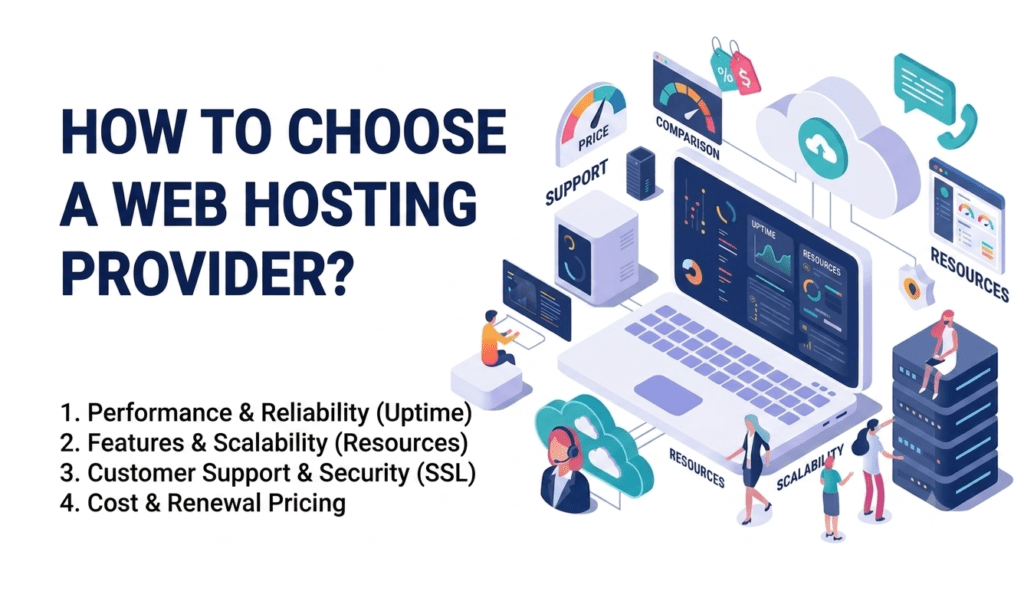
How to Choose a Web Hosting Provider
Choosing the right web hosting provider is one of the most important decisions you’ll make when building a website. Whether you’re launching a personal blog, an online store, or a business website, your hosting service directly affects your site’s speed, security, uptime, and overall user experience. If you’re wondering how to choose a web hosting provider, understanding the key features and comparing the available options will help you make the best decision.
Website speed plays a significant role in user satisfaction and SEO. Look for hosting providers that offer SSD or NVMe storage, CDN integration, server-side caching, and optimized server infrastructure for faster loading times. After your website goes live, you can measure its performance using Google PageSpeed Insights.
Why Choosing the Right Web Hosting Matters
A reliable hosting provider ensures your website remains accessible to visitors around the clock. Poor hosting can lead to slow loading times, frequent downtime, and security vulnerabilities that negatively impact both user experience and search engine rankings. Investing in quality hosting gives your website a strong foundation for growth and performance.
Key Factors to Consider
1. Website Performance
Website speed plays a significant role in user satisfaction and SEO. Look for hosting providers that offer SSD or NVMe storage, CDN integration, server-side caching, and optimized server infrastructure for faster loading times.
2. Uptime Guarantee
The best web hosting companies typically provide a 99.9% uptime guarantee. Consistent uptime ensures your visitors can access your website whenever they need to, preventing lost traffic and revenue.
3. Security Features
Modern websites require strong security protection. Choose website hosting sites that include SSL certificates, malware scanning, automatic backups, DDoS protection, and firewalls as part of their hosting packages.
Modern websites require strong security protection. Choose website hosting sites that include SSL certificates, malware scanning, automatic backups, DDoS protection, and firewalls as part of their hosting packages. If you want to learn more about free SSL certificates and how they secure websites, visit Let’s Encrypt.
4. Customer Support
Reliable customer support is essential, especially if you’re new to website management. Look for hosting companies that offer 24/7 support through live chat, email, or phone to resolve technical issues quickly.
5. Scalability
As your website grows, your hosting requirements will change. Select a hosting provider that makes it easy to upgrade your plan without causing downtime or complicated migrations.
Types of Web Hosting Services
Understanding what web hosting services are available helps you choose the right option.
If you’re new to hosting, it’s helpful to understand the fundamentals of website hosting before selecting a plan. The official WordPress Hosting documentation explains common hosting requirements and recommendations. Shared Hosting: Affordable and ideal for beginners or small websites.
- VPS Hosting: Offers better performance and greater control for growing businesses.
- Dedicated Hosting: Provides an entire server for high-traffic websites with maximum performance.
- Cloud Hosting: Delivers excellent scalability, flexibility, and reliability for modern websites.
- Managed WordPress Hosting: Specifically optimized for WordPress websites with automatic updates and enhanced security.
Best Hosting Sites to Consider
Many of the best hosting sites offer different features depending on your needs. When comparing providers, consider pricing, renewal costs, storage, bandwidth, uptime history, customer reviews, and included security features rather than focusing only on introductory discounts.
The best web hosting provider is the one that aligns with your website goals, expected traffic, technical knowledge, and budget. Small businesses may prioritize affordability, while eCommerce websites often require higher performance and advanced security features.
When evaluating top web hosting services, check whether they provide free website migration, one-click CMS installation, email hosting, daily backups, and an easy-to-use control panel. These features simplify website management and save time.
Conclusion
Learning how to choose a web hosting provider doesn’t have to be complicated. Start by identifying your website’s needs, compare features instead of just prices, and select a provider known for strong uptime, responsive customer support, robust security, and room for future growth.
Before purchasing a hosting plan, it’s also worth understanding how domain names are managed and how they work with web hosting. You can learn more from ICANN, the organization responsible for coordinating the global domain name system.
Whether you’re creating your first website or upgrading to a better hosting solution, choosing the right provider is a long-term investment in your website’s success. By carefully comparing the best web hosting options and understanding the different web hosting services available, you’ll be well-equipped to select a hosting plan that supports your online goals for years to come.