

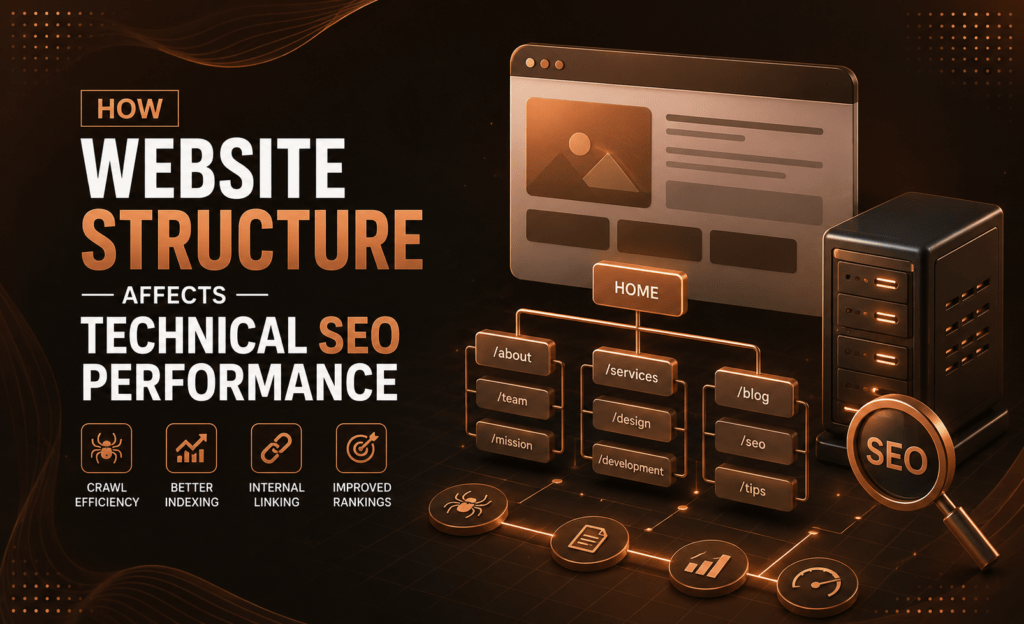
A well-organized website structure is one of the most important factors that influence technical SEO performance. Search engines like Google use website architecture to understand your content, crawl your pages, and decide how pages should rank in search results.
A poor website structure affects technical SEO performance. It can create crawling issues, weak internal linking, slow indexing, and poor user experience. On the other hand, a clear structure helps search engines discover your important pages and improves overall SEO performance.
How Website Structure Affects Technical SEO Performance
1. Website Structure Helps Search Engines Crawl Your Pages
Search engines use bots (crawlers) to discover and index website pages. A logical website structure makes it easier for crawlers to move from one page to another.
For example:
Good Structure:
Homepage
├── Services
│ ├── SEO Services
│ ├── Web Development
│ └── UI/UX Design
├── Blog
│ ├── SEO Guides
│ └── WordPress Tips
└── Contact
This structure helps Google understand the relationship between pages.
Poor Structure:
Homepage
├── Page 1
├── Random Page
├── Blog Post
└── Service Page
When pages are not properly connected, search engines may struggle to identify important content.
2. Improves Crawl Efficiency
Large websites often have thousands of pages. A clean structure helps search engines spend their crawling resources effectively.
Technical SEO elements affected by website structure include:
- Crawl budget usage
- XML sitemap efficiency
- Internal link discovery
- Indexation control
- Duplicate content prevention
A flat website structure where important pages are reachable within a few clicks improves crawl efficiency.
Recommended rule: Important pages should be accessible within 3 clicks from the homepage.
3. Strengthens Internal Linking
Internal links help distribute SEO authority throughout your website.
Example:
A blog about “WordPress Speed Optimization” can link to:
- WordPress Hosting Service
- Website Development Service
- Technical SEO Service
This creates topical connections and helps Google understand your expertise.
Benefits of strong internal linking:
- Better page discovery
- Improved rankings
- Increased user engagement
- More evenly distributed link authority
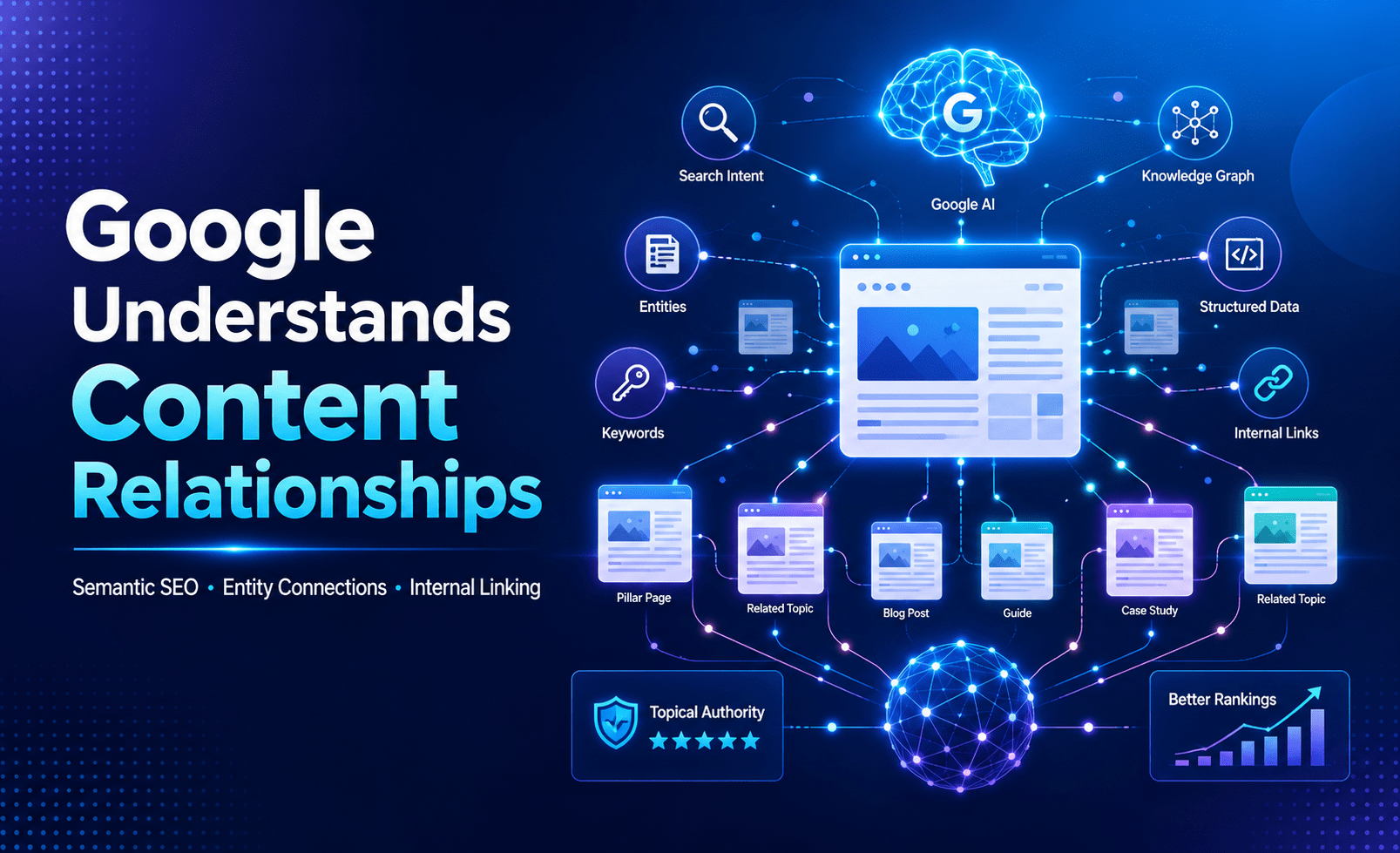
4. Helps Google Understand Content Relationships
Website structure creates topical relevance through categories and clusters.
Example:
Main Topic: Technical SEO
Supporting pages:
- Website Structure Optimization
- Core Web Vitals Guide
- XML Sitemap Best Practices
- Robots.txt Optimization
- Schema Markup Guide
This creates a topic cluster that signals authority to search engines.
5. Improves User Experience (UX) Signals
Technical SEO is not only about search engines. User experience also affects SEO performance.
A good website structure helps visitors:
- Find information faster
- Navigate easily
- Spend more time on the website
- Visit more pages
Poor navigation can increase bounce rates and reduce engagement signals.
6. Prevents Duplicate Content Issues
Poor website architecture can create multiple URLs for the same content.
Example:
- example.com/service
- example.com/services
- example.com/service-page
Search engines may see these as separate pages, causing:
- Duplicate content problems
- Ranking confusion
- Lower SEO value
Proper URL structure and canonical tags help prevent these issues.
7. Creates SEO-Friendly URLs
Clean URLs improve understanding for both users and search engines.
Good URL:
example.com/wordpress-speed-optimization
Bad URL:
example.com/page?id=4587
SEO-friendly URLs should be:
- Short
- Descriptive
- Keyword-focused
- Easy to read
8. Supports Better Mobile SEO
A structured website improves mobile navigation and performance.
With Google’s mobile-first indexing, websites should have:
- Simple menus
- Responsive design
- Fast loading pages
- Clear content hierarchy
A confusing structure can negatively affect mobile user experience.
9. Helps Implement Technical SEO Elements Correctly
A strong website structure makes it easier to manage:
- XML sitemap
- Breadcrumb navigation
- Schema markup
- Robots.txt rules
- Canonical URLs
- Redirects
For example, breadcrumb schema helps Google understand page hierarchy:
Home > Services > SEO Services
How to Create an SEO-Friendly Website Structure
Follow these best practices:
- Create clear categories and subcategories
- Keep important pages within 3 clicks
- Use descriptive URLs
- Build strong internal links
- Remove unnecessary duplicate pages
- Use breadcrumbs
- Create an organized XML sitemap
- Optimize navigation menus
Conclusion
Website structure plays a major role in technical SEO success. A well-planned architecture improves crawling, indexing, rankings, and user experience. Before creating more content, businesses should ensure their website foundation is optimized because even great content can struggle to rank on a poorly structured website.
A strong website structure is the foundation that allows search engines and users to easily understand, navigate, and trust your website.