

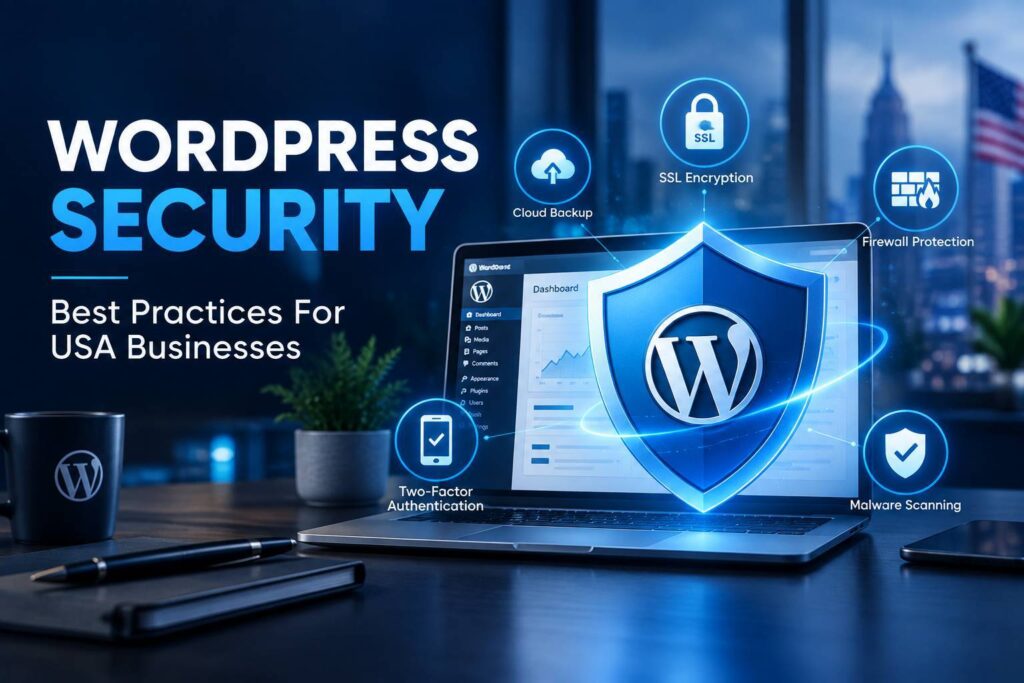
In today’s digital landscape, cyber threats are increasing at an alarming rate. For businesses in the USA, protecting their WordPress websites is not just about safeguarding data – it’s about maintaining trust, credibility, and uninterrupted operations.
This guide explores the best WordPress security practices for USA businesses, covering hosting, plugins, backups, and ongoing maintenance to ensure your website remains secure and resilient.
Best WordPress Security Practices for USA Businesses
Why WordPress Security Matters
WordPress powers millions of websites worldwide, making it a prime target for hackers. USA businesses, especially small and medium enterprises, face risks such as malware attacks, phishing attempts, and data breaches. Implementing strong security practices ensures:
- Protection of sensitive customer data.
- Prevention of downtime and financial loss.
- Compliance with industry regulations.
- Long‑term trust and credibility with clients.
Key takeaway: Security is not optional – it’s a business necessity.
Secure WordPress Hosting Solutions
Your hosting provider plays a critical role in website security. Choosing a secure hosting solution ensures your site has built‑in protection against common threats.
Best practices include:
- Selecting hosts that offer SSL certificates and firewalls.
- Using servers with malware scanning and intrusion detection.
- Opting for managed WordPress hosting with automatic updates.
- Ensuring data centers comply with USA security standards.
Why it matters: Secure hosting reduces vulnerabilities and provides a strong foundation for your WordPress site.
WordPress Plugin Security Updates
Plugins add functionality but can also introduce risks if not updated regularly. Outdated plugins are one of the most common entry points for hackers.
Best practices include:
- Regularly updating plugins and themes.
- Removing unused or outdated plugins.
- Using plugins from trusted developers with strong reviews.
- Enabling automatic updates for critical security patches.
Why it matters: Consistent updates protect your site from known vulnerabilities and exploits.
WordPress Malware Protection
Malware can compromise your website, steal data, and damage your brand reputation. Implementing proactive malware protection is essential.
Best practices include:
- Installing reputable security plugins like Wordfence or Sucuri.
- Running regular malware scans.
- Blocking suspicious IP addresses and brute‑force login attempts.
- Monitoring file changes to detect unauthorized activity.
Why it matters: Early detection and prevention minimize damage and keep your site safe.
Website Backup Strategies for WordPress
Even with strong security, no system is 100% immune. Backups act as your safety net, allowing you to restore your site quickly after an attack.
Best practices include:
- Scheduling automatic daily or weekly backups.
- Storing backups in secure offsite locations.
- Testing backups regularly to ensure functionality.
- Using plugins like UpdraftPlus or BackupBuddy for easy management.
Why it matters: Reliable backups ensure business continuity and minimize downtime.
Affordable WordPress Security Services
For USA businesses that lack in‑house IT teams, outsourcing security can be cost‑effective and efficient. Professional services provide ongoing monitoring and support.
Best practices include:
- Partnering with agencies that specialize in WordPress security.
- Investing in affordable maintenance packages.
- Leveraging expert support for malware removal and firewall setup.
- Combining security services with SEO and performance optimization.
Why it matters: Affordable services give businesses peace of mind without straining budgets.
Conclusion
The best WordPress security practices for USA businesses involve a combination of secure hosting, plugin updates, malware protection, backup strategies, and professional services.
By implementing these measures, companies can safeguard their websites, protect customer data, and maintain credibility in a competitive digital environment. Security is not just about technology – it’s about protecting your brand and ensuring long‑term growth.