
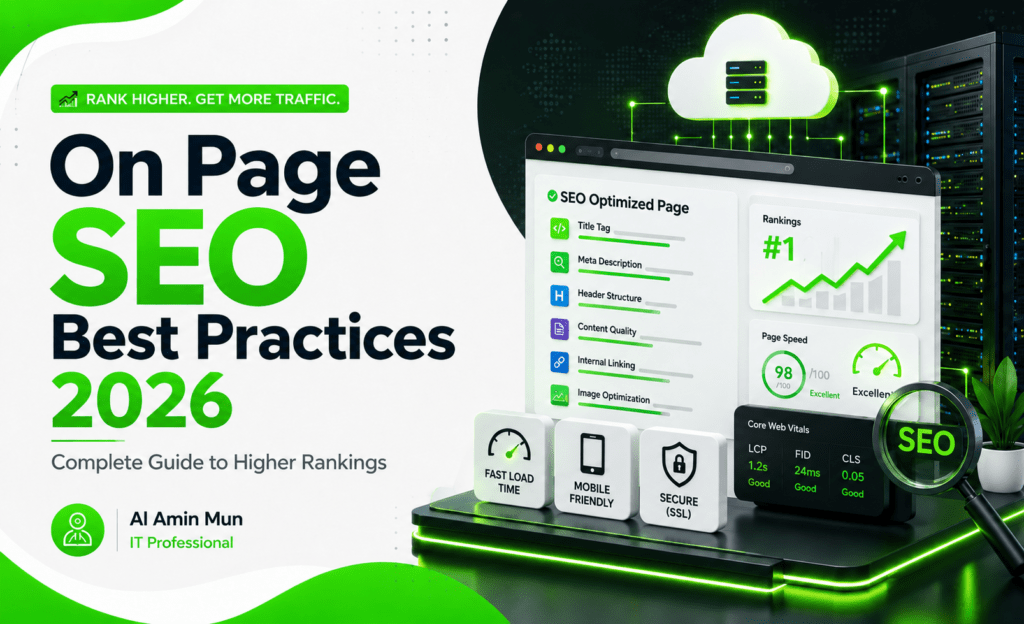
On-page SEO best practices 2026 are more focused than ever on creating high-quality, user-first content while ensuring your website is technically optimized. Search engines now evaluate not only keywords but also page experience, content quality, topical authority, and user intent.
By following modern on-page SEO techniques, you can improve your search rankings, attract qualified visitors, and increase conversions. Here are the most important best practices to follow in 2026.
On-Page SEO Best Practices 2026
1. Understand Search Intent First
Before writing content, identify what users want. Are they looking for information, a product, a service, or a comparison? Matching your content to search intent improves engagement and rankings.
2. Use Your Focus Keyword Naturally
Include your focus keyword in strategic locations:
- SEO title
- Meta description
- URL slug
- First paragraph
- One or two headings
- Image alt text
- Conclusion
Avoid keyword stuffing. Natural usage is far more effective for SEO content optimization.
3. Write Helpful, Original Content
Google rewards content that demonstrates experience, expertise, authority, and trustworthiness (E-E-A-T). Focus on solving users’ problems with accurate, practical, and well-organized information.
4. Optimize Your Title Tag
Create a compelling title that includes your focus keyword near the beginning. Keep it between 50–60 characters to avoid truncation in search results.
5. Create an Engaging Meta Description
Although meta descriptions are not a direct ranking factor, they significantly influence click-through rates. Write clear descriptions between 145–155 characters.
6. Structure Content with Headings
Use one H1 heading and organize your content with H2 and H3 headings. A clear heading structure improves readability and helps search engines understand your page.
7. Improve Internal Linking
Link to relevant articles and service pages throughout your website. Internal links help distribute authority, improve navigation, and strengthen topical relevance.
8. Add High-Quality External Links
Link to trusted sources when supporting facts or statistics. Authoritative outbound links improve credibility and provide additional value to readers.
9. Optimize Images
Compress images before uploading, use descriptive filenames, and write keyword-relevant alt text to improve accessibility and image SEO.
10. Improve Page Speed
Fast-loading websites provide a better user experience and support stronger rankings. Optimize images, enable caching, minimize CSS and JavaScript, and choose reliable hosting.
11. Ensure Mobile Responsiveness
Most users browse on mobile devices. Your website should adapt seamlessly to different screen sizes and remain easy to navigate.
12. Focus on Core Web Vitals
Core Web Vitals continue to influence user experience. Monitor metrics like Largest Contentful Paint (LCP), Cumulative Layout Shift (CLS), and Interaction to Next Paint (INP).
13. Use Schema Markup
Structured data helps search engines better understand your content and may increase your chances of earning rich results in search.
14. Create SEO-Friendly URLs
Keep URLs short, descriptive, and keyword-focused. Avoid unnecessary numbers, symbols, or long strings of words.
15. Regularly Update Existing Content
SEO is an ongoing process. Review your content regularly, update outdated information, improve readability, and add new insights to maintain strong rankings.
Common On-Page SEO Mistakes
Avoid these common mistakes:
- Keyword stuffing
- Duplicate content
- Missing meta descriptions
- Slow page speed
- Poor internal linking
- Broken links
- Thin content
- Ignoring mobile optimization
On-Page SEO Checklist
- Before publishing, verify that your page includes:
- Focus keyword in strategic locations
- Optimized title tag and meta description
- Proper heading structure
- Internal and external links
- Optimized images
- Mobile-friendly design
- Fast loading speed
- Schema markup where appropriate
- High-quality, original content
Conclusion
Following these on-page SEO best practices 2026 helps create content that satisfies both users and search engines. Strong on-page SEO combines helpful content, technical optimization, and an excellent user experience. As search algorithms continue to evolve, regularly auditing and improving your pages is essential for maintaining visibility.
Using trusted resources like Google Search Central for official SEO guidance and PageSpeed Insights to monitor website performance can help you stay aligned with current best practices. If you want consistent long-term results, investing in professional on-page SEO and website optimization can provide a strong foundation for sustainable organic growth.