

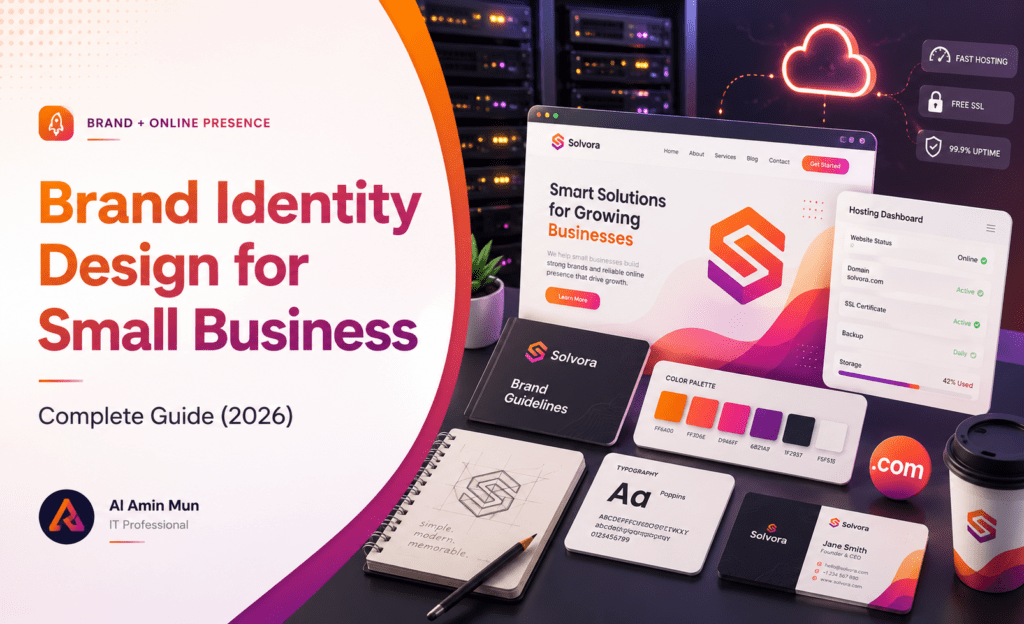
Building a successful business takes more than offering a great product or service. Customers also need to recognize, trust, and remember your brand. That’s where brand identity design for small business becomes essential. A strong brand identity helps your business stand out from competitors, creates a professional image, and builds long-term customer loyalty.
Whether you’re launching a new business or refreshing an existing one, investing in a consistent brand identity can have a significant impact on your growth.
What Is Brand Identity Design?
Brand identity design is the process of creating the visual and communication elements that represent your business. It includes everything customers see and associate with your brand, such as:
- Logo
- Color palette
- Typography
- Brand voice
- Business cards
- Social media graphics
- Website design
- Marketing materials
Together, these elements create a consistent experience that helps customers recognize your business across different platforms.
Why Brand Identity Matters for Small Businesses
Small businesses often compete with larger, well-established brands. A professional brand identity helps level the playing field by making your business appear more credible and trustworthy.
Some key benefits include:
- Builds customer trust
- Increases brand recognition
- Creates a professional appearance
- Supports marketing campaigns
- Improves customer loyalty
- Differentiates your business from competitors
A memorable brand makes it easier for customers to choose your business when they need your products or services.
Brand Identity Design for Small Business
1. Professional Logo
Your logo is the face of your business. It should be simple, memorable, scalable, and relevant to your industry.
2. Brand Colors
Colors influence emotions and purchasing decisions. Choose a color palette that reflects your brand personality and use it consistently across all platforms.
3. Typography
Select two or three fonts that work well together. Consistent typography improves readability and strengthens your visual identity.
4. Brand Voice
Your messaging should match your audience. Whether your tone is professional, friendly, or creative, maintain consistency across your website, emails, and social media.
5. Visual Style
Use consistent photography, illustrations, icons, and graphic elements to create a recognizable look.
How to Create a Strong Brand Identity
Understand Your Audience
Identify who your ideal customers are, their needs, preferences, and problems. Your brand should speak directly to them.
Define Your Brand Values
Clarify what your business stands for and what makes it unique. Your values should guide every branding decision.
Study Your Competitors
Research businesses in your industry to understand their branding. Look for opportunities to differentiate your brand rather than copy others.
Create Brand Guidelines
Document your logo usage, colors, fonts, tone of voice, and design rules. Brand guidelines ensure consistency as your business grows.
Common Branding Mistakes
Avoid these common errors:
- Using inconsistent colors and fonts
- Frequently changing your logo
- Copying competitor designs
- Ignoring your target audience
- Using low-quality graphics
- Having inconsistent messaging across platforms
Consistency is one of the most important factors in successful branding.
Brand Identity and SEO
Although branding is different from search engine optimization, they work together. A recognizable brand often leads to:
- Higher click-through rates
- More returning visitors
- Increased customer trust
- Better engagement
- Improved conversions
A professionally branded website also creates a better user experience, which supports your overall digital marketing efforts.
Tips for Maintaining Your Brand Identity
Keep your branding strong by:
- Using the same logo everywhere
- Following your brand guidelines
- Updating marketing materials regularly
- Maintaining a consistent tone of voice
- Refreshing your branding only when necessary
- Strong brands evolve over time while remaining recognizable.
Conclusion
Brand identity design for small business is more than creating a logo—it is about building a consistent and memorable experience that customers trust. From your website and social media to your packaging and marketing materials, every interaction should reflect your brand’s personality and values.
Investing in professional branding helps increase recognition, build credibility, and support long-term business growth. When combined with quality products, excellent customer service, and effective marketing, a strong brand identity becomes one of your most valuable business assets.