

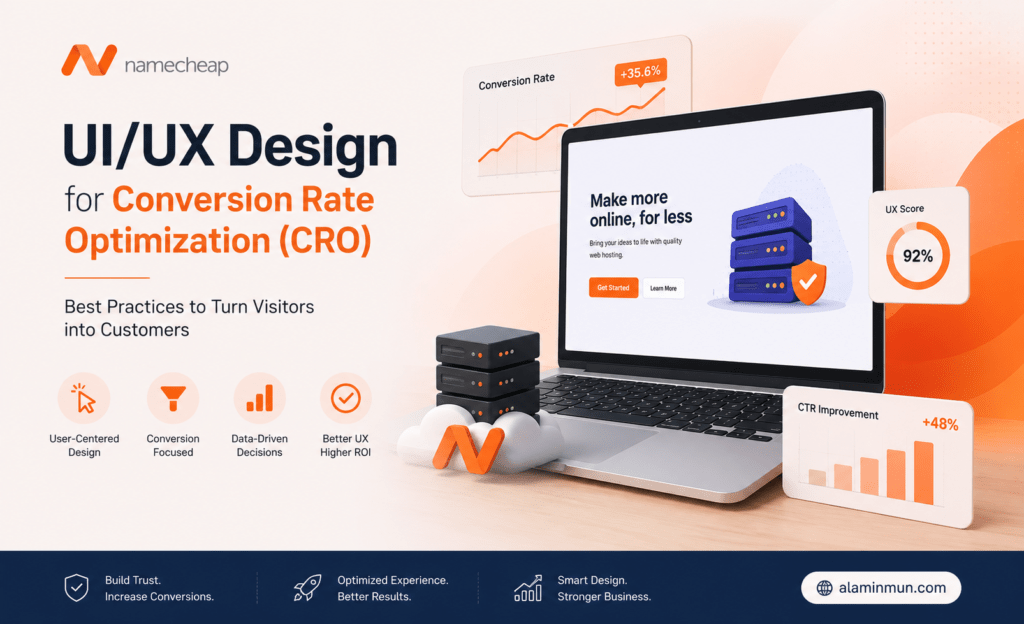
UI/UX Design for Conversion Rate Optimization (CRO) focuses on creating websites that encourage visitors to take meaningful actions, such as making a purchase, submitting a contact form, booking a service, or signing up for a newsletter.
A well-designed user interface (UI) and user experience (UX) reduce friction, build trust, and guide users naturally through the conversion funnel. Whether you run an eCommerce store, business website, or SaaS platform, improving your UI/UX can increase conversions without spending more on advertising.
Why UI/UX Matters for CRO
Driving traffic to your website is only the first step. If visitors struggle to navigate your site or find the information they need, they will leave without converting. A user-friendly website improves engagement by making it easy to browse pages, understand content, and complete actions.
Better UI/UX also lowers bounce rates, increases customer satisfaction, and supports SEO by improving user experience signals.
Key UI/UX Principles for Higher Conversions
1. Clear Visual Hierarchy
Guide users’ attention with large headlines, contrasting CTA buttons, consistent typography, proper spacing, and strategic use of colors. A strong visual hierarchy helps visitors focus on the most important content first.
2. Mobile-First Design
Most users browse websites on mobile devices. Use responsive layouts, readable text, touch-friendly buttons, and fast-loading pages to provide a smooth experience across all screen sizes.
3. Fast Page Speed
Slow websites reduce conversions. Optimize images, CSS, JavaScript, browser caching, lazy loading, and Core Web Vitals to improve loading speed and keep users engaged.
4. Strong Call-to-Action (CTA)
Your CTA should be easy to find and encourage action. Use clear phrases like Get Free Quote, Book a Consultation, Start Free Trial, or Buy Now. Place CTAs above the fold and throughout longer pages where appropriate.
5. Simple Navigation
A clean menu, logical page structure, breadcrumbs, and search functionality help users quickly find the information they need. Simple navigation reduces frustration and increases conversions.
6. Build Trust
Trust is essential for conversions. Display customer reviews, testimonials, case studies, security badges, guarantees, and clear contact information to increase credibility and reassure visitors.
7. Reduce Form Friction
Keep forms short and ask only for essential information. Add inline validation, autofill support, and progress indicators for multi-step forms to improve completion rates.
8. Improve Readability
Use short paragraphs, descriptive headings, bullet points, readable fonts, white space, and good color contrast. Well-structured content is easier to scan and keeps users engaged.
9. Optimize Landing Pages
A high-converting landing page includes a clear value proposition, relevant images, benefit-focused content, social proof, and a single primary CTA. Remove unnecessary distractions that may reduce conversions.
10. Test and Improve
Use A/B testing to compare headlines, button colors, CTA text, page layouts, images, and forms. Continuous testing helps identify what works best for your audience and improves conversion rates over time.
Common UI/UX Mistakes That Hurt Conversions
Avoid cluttered layouts, confusing navigation, slow-loading pages, poor mobile optimization, intrusive pop-ups, hidden contact information, weak product descriptions, low-quality images, and long checkout processes.
These mistakes create friction that discourages visitors from completing their goals.
CRO Metrics to Monitor
Track important performance metrics, including Conversion Rate, Bounce Rate, Click-Through Rate (CTR), Average Session Duration, Scroll Depth, Exit Rate, Cart Abandonment Rate, and Form Completion Rate. These metrics help identify opportunities to improve the user experience.
Best Tools for UI/UX CRO
Popular tools include Google Analytics 4 for user insights, Microsoft Clarity and Hotjar for heatmaps and session recordings, Crazy Egg for visitor behavior analysis, Figma and Adobe XD for interface design, and VWO or Optimizely for A/B testing and optimization. Learn the fundamentals of creating user-friendly digital experiences.
Conclusion
UI/UX Design for Conversion Rate Optimization is one of the most effective ways to improve website performance and generate more leads or sales. By focusing on clear navigation, faster page speed, mobile responsiveness, compelling CTAs, trust-building elements, and continuous testing, businesses can create better user experiences that drive higher conversions.
Regularly reviewing user behavior and making data-driven improvements ensures your website continues to meet visitor expectations while supporting long-term business growth.