

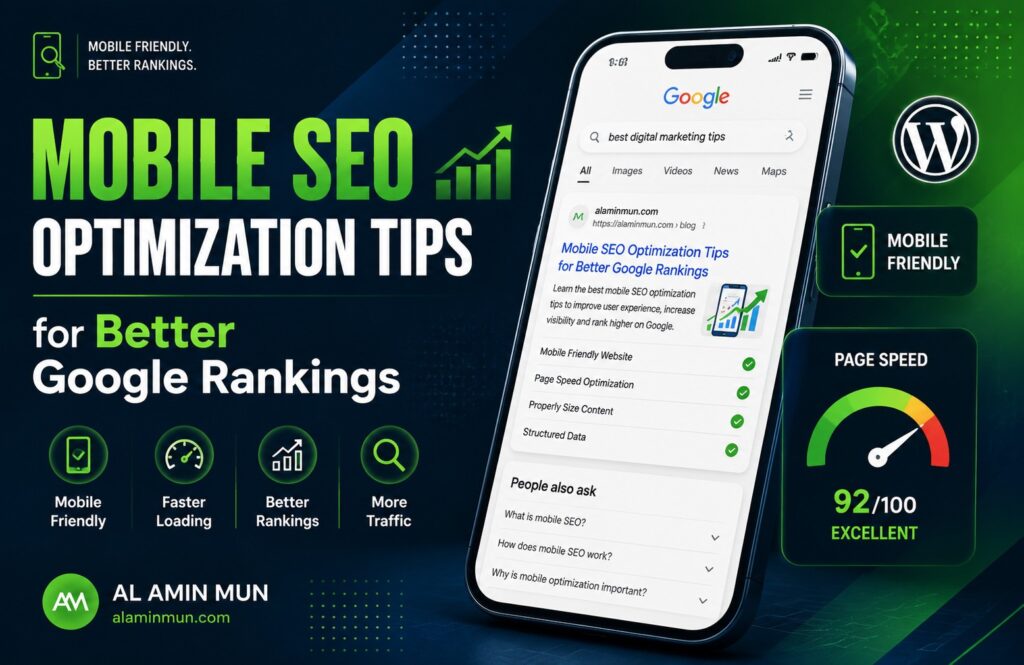
Mobile SEO Optimization is very crucial nowadays. Cause today more than half of all web traffic comes from mobile devices. To provide a better user experience, Google now uses mobile-first indexing, meaning it primarily evaluates the mobile version of your website when determining search rankings. If your site isn’t optimized for smartphones and tablets, you’re likely missing out on valuable traffic and potential customers.
In this guide, you’ll learn the most effective mobile SEO optimization tips to improve your website’s performance, user experience, and Google rankings.
What Is Mobile SEO Optimization?
Mobile SEO optimization is the process of improving your website so it performs well on mobile devices. This includes responsive design, fast loading speeds, easy navigation, readable content, and a seamless browsing experience.
A mobile-friendly website not only helps users but also sends positive ranking signals to search engines.
Why Mobile SEO Matters
Google prioritizes websites that deliver a great mobile experience. If your pages are slow, difficult to navigate, or contain content that doesn’t fit smaller screens, visitors are more likely to leave quickly. A higher bounce rate can negatively impact your SEO performance.
Optimizing for mobile helps you:
- Improve Google rankings
- Increase organic traffic
- Reduce bounce rates
- Boost engagement and conversions
- Enhance user satisfaction
Top Mobile SEO Optimization Tips
1. Use Responsive Web Design
Responsive web design automatically adjusts your website to fit different screen sizes. Instead of creating separate desktop and mobile versions, a responsive layout ensures visitors have a consistent experience across all devices.
Google also recommends responsive design because it’s easier to crawl and index.
2. Improve Mobile Page Speed
Speed is one of the most important ranking factors for mobile SEO. Slow-loading pages frustrate users and increase bounce rates.
To improve page speed:
- Compress images before uploading.
- Enable browser caching.
- Minify CSS, JavaScript, and HTML files.
- Remove unnecessary plugins and scripts.
- Choose a reliable hosting provider.
Aim to load your pages within three seconds whenever possible.
3. Optimize Core Web Vitals
Core Web Vitals measure the overall user experience of your website.
Focus on:
- Largest Contentful Paint (LCP): Load main content quickly.
- Interaction to Next Paint (INP): Ensure fast user interactions.
- Cumulative Layout Shift (CLS): Prevent unexpected page movement.
Improving these metrics can positively affect both user experience and search rankings.
4. Make Navigation Simple
Visitors should find information easily on small screens.
Best practices include:
- Clear navigation menus
- Large tap-friendly buttons
- Easy-to-read fonts
- Logical page structure
- Simple internal linking
A clean navigation system keeps users engaged longer.
5. Optimize Images
Large images often slow down websites.
For better performance:
- Compress image files.
- Use modern formats like WebP.
- Add descriptive alt text.
- Specify image dimensions.
- Enable lazy loading where appropriate.
These improvements help both SEO and page speed.
6. Avoid Intrusive Pop-Ups
Pop-ups that cover most of the screen can frustrate mobile users and may hurt your rankings.
Instead, use:
- Small banners
- Slide-in forms
- Exit-intent pop-ups
- Non-intrusive promotional messages
Always prioritize user experience over aggressive marketing.
7. Improve Content Readability
Mobile users prefer content that’s easy to scan.
Follow these tips:
- Use short paragraphs.
- Add descriptive headings.
- Include bullet points.
- Leave enough white space.
- Use a font size of at least 16px.
Well-formatted content keeps readers engaged and encourages them to stay on your site longer.
8. Optimize for Local SEO
Many mobile searches include local intent, such as “restaurants near me” or “SEO agency near me.”
Improve local visibility by:
- Optimizing your Google Business Profile.
- Using location-based keywords.
- Keeping your business information consistent.
- Encouraging customer reviews.
This helps your business appear in local search results and Google Maps.
Common Mobile SEO Mistakes
Avoid these common issues:
- Non-responsive website design
- Slow loading pages
- Tiny buttons and unreadable text
- Missing image alt text
- Broken internal links
- Excessive pop-ups
- Poor Core Web Vitals scores
Fixing these problems can significantly improve your mobile performance.
Best Tools for Mobile SEO
Several free and paid tools can help you monitor and improve your mobile SEO:
- Google Search Console
- Google PageSpeed Insights
- Lighthouse
- GTmetrix
- Ahrefs
- SEMrush
Regular audits allow you to identify issues before they affect your rankings.
Conclusion
Mobile SEO optimization is no longer optional-it’s an essential part of modern search engine optimization. By using responsive design, improving page speed, optimizing Core Web Vitals, simplifying navigation, and creating a better mobile experience, you can improve your Google rankings and attract more organic traffic.
Start implementing these mobile SEO optimization tips today, and you’ll build a faster, more user-friendly website that performs well in both search results and user satisfaction.