

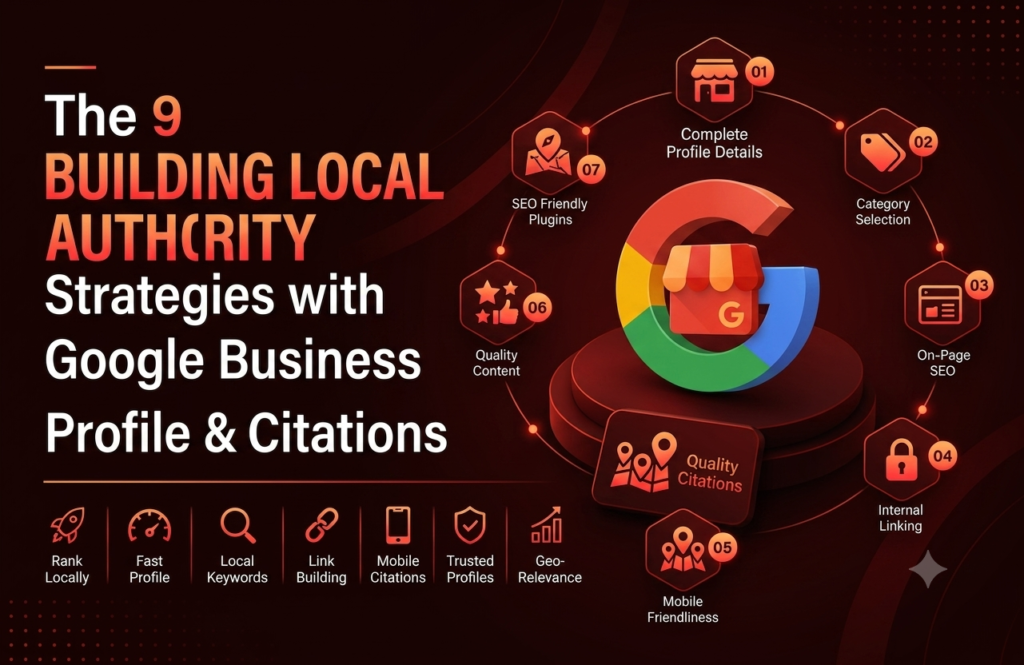
Building local authority is essential for businesses that want to appear prominently in local search results and attract customers from their target area. When people search for services near them, search engines look at multiple signals to determine which businesses are trustworthy, relevant, and established in a particular location.
Two of the most important foundations of local SEO are a well-optimized Google Business Profile and consistent local citations. When these elements work together, they can strengthen your business’s local presence, improve search visibility, and make it easier for potential customers to find and contact you.
What Is Local Authority?
Local authority refers to the level of trust and relevance a business demonstrates within a specific geographic market.
Search engines can use various signals to understand whether a business is genuinely associated with a particular location. These can include your business information, website content, customer reviews, links, local mentions, and business directory listings.
The goal isn’t simply to create as many listings as possible. Instead, you should build a consistent and trustworthy digital presence across relevant platforms.
How to Build Local Authority
1. Optimize Your Google Business Profile
Your Google Business Profile is one of the most important assets for local search visibility.
Start by making sure your core business information is accurate and complete.
Check your:
- Business name
- Address
- Phone number
- Website
- Business category
- Opening hours
- Services
- Business description
Choose the most accurate primary category for your business. You can also add relevant secondary categories where appropriate.
Your business description should clearly explain what you offer and the areas you serve. Avoid stuffing keywords unnaturally. Write for customers first while naturally including relevant services and location information.
2. Keep Your Business Information Consistent
Consistency is a fundamental part of building local authority.
Your business name, address, and phone number are often referred to as NAP information.
For example, if your Google Business Profile uses:
- ABC Digital Marketing
- 123 Main Street
- New York, NY
- 555-123-4567
Your important directory listings should use the same core information.
Differences such as inconsistent business names, outdated addresses, or incorrect phone numbers can create confusion.
Review existing listings and correct outdated information whenever possible.
3. Build High-Quality Local Citations
A local citation is a mention of your business’s key information on another website.
Citations can appear on:
- Business directories
- Local directories
- Industry websites
- Chamber of commerce websites
- Local organizations
- Review platforms
- Community websites
Focus on quality and relevance rather than quantity.
Ten highly relevant and trustworthy citations can be more valuable than dozens of low-quality directory submissions.
Start with platforms that are commonly used by customers in your industry and location.
4. Prioritize Industry-Relevant Directories
Not every directory is equally useful.
If you’re a restaurant, relevant platforms may include restaurant and food directories. If you’re a contractor, industry-specific business directories may be more appropriate.
Look for directories that:
- Are relevant to your industry
- Have genuine users
- Have a local focus
- Provide accurate business information
- Are trustworthy and maintained
Avoid mass-submitting your business to low-quality directories solely to increase the number of citations.
5. Strengthen Google Maps Visibility
For many local businesses, Google Maps visibility is a major source of potential customers.
A complete and accurate Google Business Profile can help Google better understand your business.
Keep your profile active by adding useful updates, photos, services, and other relevant information.
Customer reviews are also important. Encourage genuine customers to share their experiences and respond professionally to both positive and negative feedback.
Never create fake reviews or manipulate ratings. Authentic customer feedback is far more valuable for building long-term trust.
6. Create Location-Relevant Website Content
Local authority shouldn’t depend entirely on external listings.
Your website should reinforce your geographic relevance.
Create useful content that naturally addresses the needs of customers in your service area.
For example, a local SEO agency could create content about:
- Local SEO strategies for small businesses
- Google Maps optimization
- Marketing trends in its city
- Local business growth strategies
- Industry-specific SEO guides
If you serve multiple locations, create genuinely useful location pages rather than publishing near-identical pages with only the city name changed.
7. Earn Local Links and Mentions
Local backlinks and mentions can further strengthen your presence.
Consider building relationships with:
- Local organizations
- Community groups
- Industry associations
- Local publications
- Business partners
- Event organizers
You could sponsor a legitimate community event, contribute expert commentary to a local publication, or collaborate with complementary businesses.
The objective is to earn genuine local recognition rather than manipulate links.
8. Keep Citations Updated
Citation management is an ongoing process.
Businesses change their:
- Addresses
- Phone numbers
- Websites
- Opening hours
- Services
- Business names
Whenever important information changes, update your major listings.
Pay particular attention after a business relocation or website migration. Old information can remain online for years if it isn’t actively corrected.
9. Track Your Local SEO Progress
Building local authority requires measurement.
Monitor metrics such as:
- Google Business Profile interactions
- Website organic traffic
- Local keyword rankings
- Google Maps visibility
- Phone calls
- Website clicks
- Direction requests
- Review growth
- Citation consistency
These metrics can help identify which local SEO activities are producing meaningful results.
Don’t judge success only by rankings. A strong local SEO strategy should ultimately generate more relevant visitors, inquiries, calls, bookings, or sales.
Conclusion
Building local authority takes time and consistency. A complete Google Business Profile, accurate local citations, consistent NAP information, relevant website content, genuine reviews, and legitimate local mentions can work together to strengthen your business’s presence in local search.
The most effective strategy isn’t to create hundreds of random listings or repeatedly add keywords to your profile. Instead, focus on building a trustworthy digital footprint that consistently demonstrates who you are, what you offer, and where you serve customers.
Start with your Google Business Profile, clean up existing citations, build relevant local listings, and then strengthen your website and local relationships. Over time, these combined signals can help establish your business as a more credible and relevant result for local searches.