
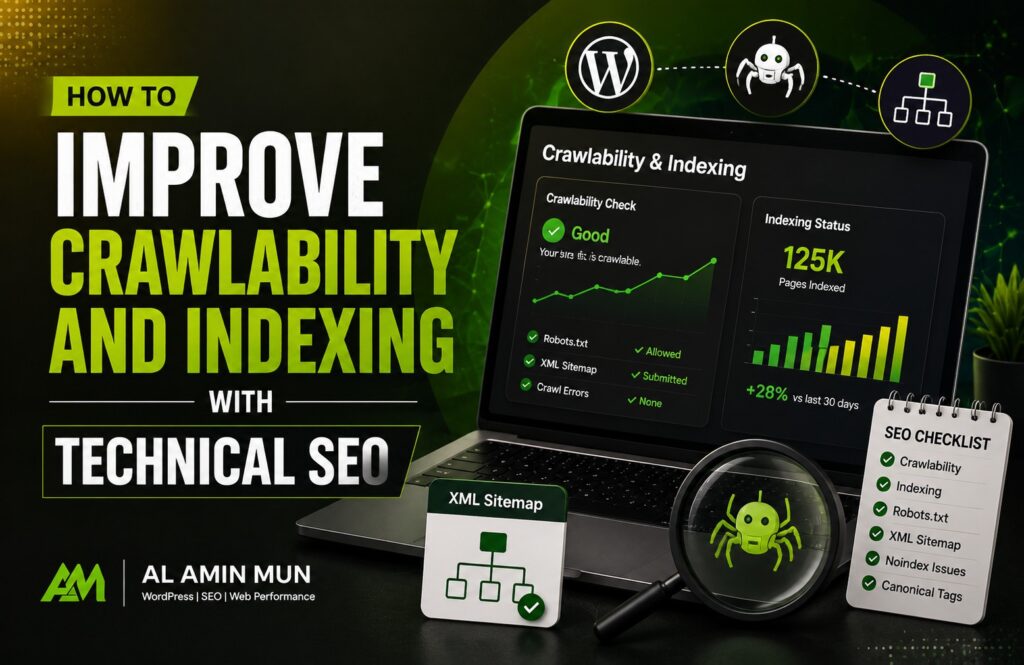
How to improve crawlability and indexing with technical SEO?? Let’s know!! Search engines need to discover and understand your website before it can appear in search results. Even high-quality content may fail to rank if search engines cannot crawl or index your pages correctly. This is why improving crawlability and indexing is one of the most important parts of technical SEO.
A well-optimized website helps search engine bots access important pages, understand site structure, and add valuable content to their index faster. Here are the most effective ways to improve crawlability and indexing.
How to Improve Crawlability and Indexing with Technical SEO
Optimize Your Website Structure
A clear website structure helps both users and search engines navigate your content. Organize pages into logical categories and keep important pages within a few clicks from the homepage.
Using descriptive URLs and a consistent navigation menu also makes crawling easier.
Create and Submit an XML Sitemap
An XML sitemap acts as a roadmap for search engines. It lists important pages that you want search engines to crawl and index.
Keep your sitemap updated whenever you publish new content, remove outdated pages, or make significant changes. Submit the sitemap through Google Search Console to help Google discover your pages faster.
Configure Robots.txt Correctly
The robots.txt file tells search engine bots which areas of your website they can or cannot crawl.
Avoid accidentally blocking important pages. At the same time, prevent crawling of unnecessary sections such as admin pages, duplicate archives, or temporary files to save crawl budget.
Improve Internal Linking
Internal links connect related pages and help search engines discover deeper content.
Link relevant blog posts, category pages, and cornerstone content naturally within your articles. A strong internal linking strategy distributes authority across your website and improves indexing.
Remove Broken Links
Broken links create dead ends for both users and search engine crawlers.
Regularly scan your website for 404 errors and either update the broken links or redirect them to relevant pages. Maintaining healthy links improves crawl efficiency.
Fix Duplicate Content
Duplicate content can confuse search engines about which version of a page should be indexed.
Use canonical tags to identify the preferred version of similar pages. Also avoid creating multiple URLs with identical content whenever possible.
Improve Website Speed
Slow-loading websites reduce crawl efficiency because search engines have limited crawl resources.
Optimize images, compress files, enable browser caching, and reduce unnecessary JavaScript to improve page speed and Core Web Vitals.
Ensure Mobile-Friendly Design
Google primarily uses mobile-first indexing, meaning it evaluates the mobile version of your website first.
Use responsive design, readable fonts, proper spacing, and mobile-friendly navigation to ensure search engines can easily crawl your content on all devices.
Monitor Indexing Status
Regularly review your indexing reports in Google Search Console.
Look for pages marked as “Discovered – currently not indexed,” “Crawled – currently not indexed,” or pages with crawl errors. Fixing these issues helps improve overall index coverage.
Eliminate Orphan Pages
Orphan pages have no internal links pointing to them, making them difficult for search engines to discover.
Ensure every important page is connected through navigation, category pages, or contextual internal links.
Final Thoughts
How to improve crawlability and indexing with technical SEO ensures that search engines can efficiently discover, understand, and rank your content. By maintaining a clean website structure, optimizing XML sitemaps, configuring robots.txt correctly, strengthening internal linking, and monitoring indexing issues, you create a strong technical foundation for long-term SEO success.
Regular technical audits will keep your website accessible to both users and search engines, helping your valuable content achieve better visibility in search results.