

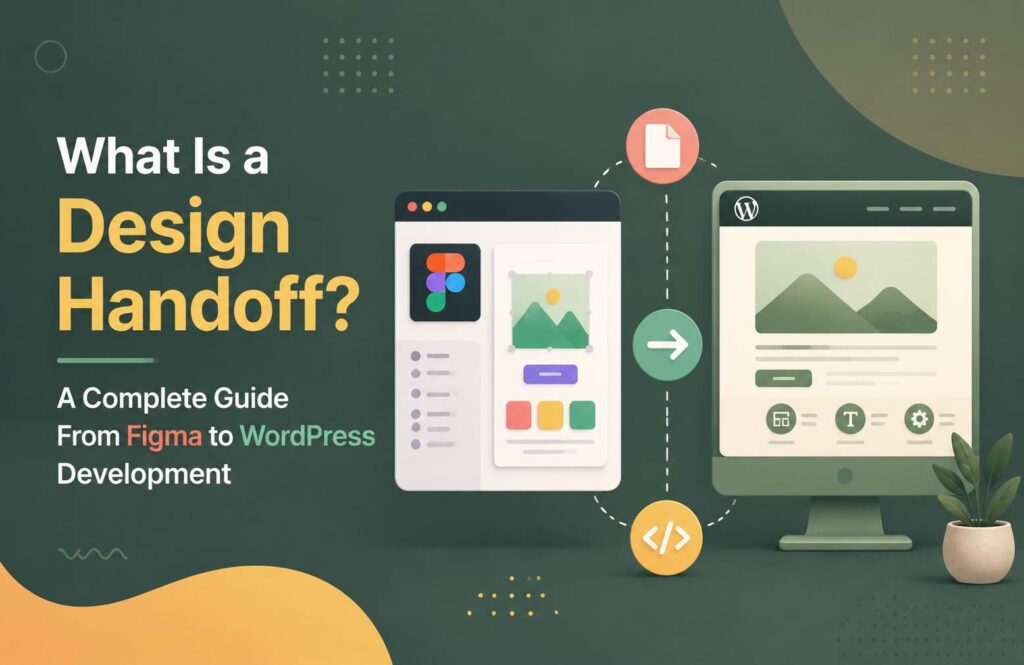
A design handoff is the process of transferring a completed design from a designer to a developer for implementation. When moving from Figma to WordPress, a clear handoff helps developers understand layouts, typography, colors, spacing, assets, responsive behavior, and interactive elements without unnecessary back-and-forth.
A good handoff connects the creative vision of a designer with the technical work of a developer. When both sides have the right information, the website can be built more accurately and efficiently.
What Is a Design Handoff?
A design handoff happens when a designer provides the necessary design files, specifications, assets, and instructions to a developer.
The designer may create the website interface in Figma, while the developer uses that information to build the actual website.
A typical handoff can include:
- Figma design files
- Typography information
- Color specifications
- Spacing and sizing
- Images and icons
- Button states
- Navigation behavior
- Responsive layouts
- Animation or interaction notes
- Design specifications
The goal is simple: the developer should have enough information to turn the design into a functioning website without having to guess what the designer intended.
Why Is a Design Handoff Important?
A poor handoff can create confusion between designers and developers. Small misunderstandings about spacing, fonts, colors, or responsive behavior can result in a website that looks different from the original design.
A well-organized developer handoff can reduce these problems.
It also creates a more efficient design-to-development workflow. Instead of repeatedly asking questions about missing information, developers can access the required specifications directly.
This can save time, reduce revisions, and improve the final quality of the website.
What Should a Designer Include in a Handoff?
A successful handoff should contain more than a Figma link.
1. Organized Figma Design Files
Figma design files should be properly organized before being shared. Pages, frames, components, and layers should have meaningful names.
Developers should be able to understand which screens represent the final approved design.
Unused versions and unnecessary elements should also be removed or clearly separated from the final designs.
2. Typography
The designer should specify the fonts used throughout the project.
This can include:
- Font family
- Font size
- Font weight
- Line height
- Letter spacing
- Heading styles
- Body text styles
Providing this information makes it easier for developers to reproduce the visual hierarchy accurately.
3. Colors
Colors should be clearly documented, especially for primary buttons, backgrounds, headings, body text, links, and other important interface elements.
Where possible, provide exact HEX, RGB, or other relevant color values.
4. Images and Icons
Developers need access to the final assets used in the design.
Images, logos, icons, illustrations, and other graphics should be provided in appropriate formats and resolutions.
This prevents developers from having to recreate or search for missing assets.
Figma Developer Handoff: What Developers Need
Figma provides features that make collaboration between designers and developers easier.
Developers can inspect elements to understand dimensions, spacing, colors, typography, and other properties.
However, the inspection information should support—not replace—communication between the designer and developer.
For example, a developer may still need clarification about what happens when a button is hovered, what appears when a menu is opened, or how a component behaves on smaller screens.
How Figma to WordPress Development Works
The transition from Figma to WordPress involves converting a static interface into a functional website.
A typical workflow looks like this:
Figma design → Design review → Developer handoff → WordPress development → Responsive testing → QA → Launch
The developer first reviews the design and identifies the required pages, components, assets, and functionality.
The approved design is then implemented using WordPress, themes, custom code, page builders, or a combination of development methods.
The final website should be tested against the original design to identify visual differences and functional issues.
The Importance of Responsive Web Design
Desktop designs alone are not enough for modern websites.
A good handoff should explain how the interface changes across different screen sizes.
For example, the designer should clarify:
- How columns stack on mobile
- How navigation changes
- How images resize
- How typography scales
- How buttons behave
- How spacing changes
- How cards or grids respond
This is an important part of responsive web design because developers need to understand how the design should behave between the provided screen sizes.
What Are Design Specifications?
Design specifications provide measurable information that developers can use during implementation.
They can include dimensions, spacing, colors, typography, border radius, shadows, component states, and other visual properties.
For example, instead of simply showing a blue button, the handoff can specify its background color, font size, padding, border radius, hover state, and disabled state.
Clear specifications reduce guesswork and help maintain consistency throughout the website.
Common Design Handoff Mistakes
Several mistakes can make the development process unnecessarily difficult.
Missing Assets
If developers do not receive the correct images, icons, or fonts, they may use temporary alternatives that do not match the final design.
Unclear Responsive Behavior
Providing only a desktop design without explaining mobile behavior can lead to inconsistent layouts.
Poorly Organized Files
Disorganized Figma design files make it difficult to identify which components and screens are final.
Missing Interaction Details
Static designs do not always explain animations, dropdowns, hover effects, popups, or other interactions.
No Developer Communication
Even a detailed handoff may require questions. Designers and developers should have a clear communication process for resolving uncertainties.
Best Practices for a Smooth Design Handoff
A strong handoff begins before development starts.
First, make sure the design is approved and the Figma design files are organized. Then provide the required assets and explain important interactions.
Use consistent components and naming conventions throughout the design.
It is also useful to create a checklist covering typography, colors, spacing, images, responsive behavior, interactions, and page-specific requirements.
Finally, designers should review the developed website against the original design. This helps identify visual inconsistencies before the website goes live.
Conclusion
A professional design handoff creates a bridge between design and development. It gives developers the information they need to transform a Figma interface into a functional WordPress website while reducing unnecessary revisions and misunderstandings.
From organized Figma design files and clear design specifications to responsive behavior and interaction details, every part of the handoff can influence the quality of the final website.
For teams working on Figma to WordPress projects, treating the handoff as an important stage of the design-to-development workflow can make the entire process faster, clearer, and more consistent.
Explore More…