
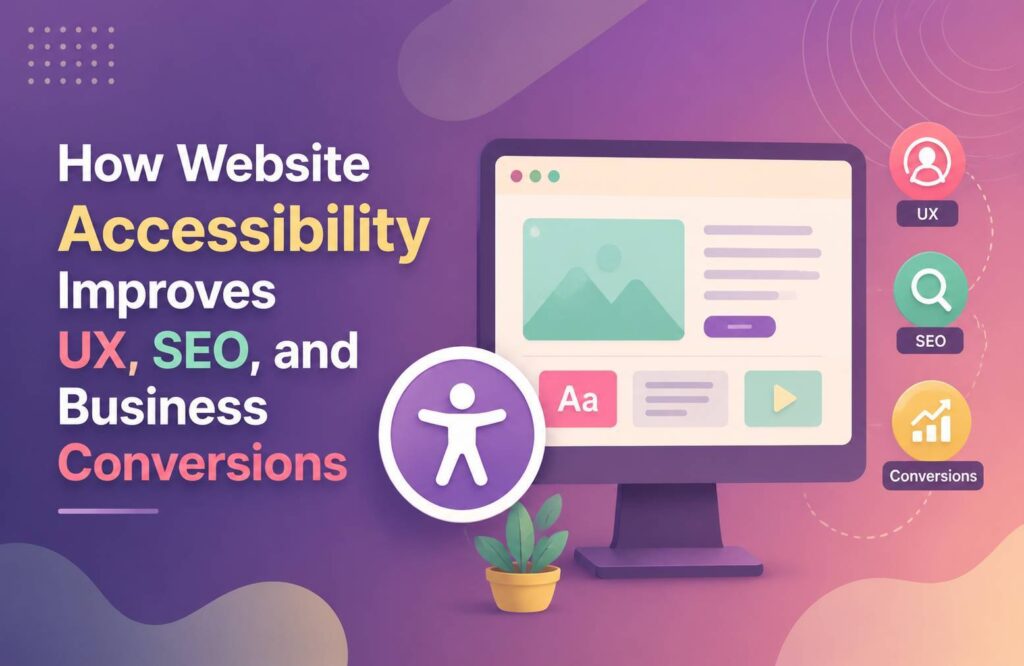
A well-designed website should be easy for everyone to use. Website accessibility helps ensure that people with different abilities can navigate, understand, and interact with your website. From readable text and clear navigation to keyboard support and proper color contrast, accessibility makes a website more inclusive while also improving the overall user experience.
For businesses, investing in accessibility can do more than support visitors. It can improve usability, strengthen SEO foundations, build trust, and create more opportunities for conversions.
What Is Website Accessibility?
Website accessibility means designing and developing a website so that people with disabilities can use it effectively. This includes people with visual, auditory, physical, speech, cognitive, or neurological disabilities.
An accessible website may include features such as descriptive image alt text, keyboard-friendly navigation, readable typography, sufficient color contrast, clear headings, captions for videos, and properly labeled forms.
Accessibility is not only about adding technical features. It is about creating an experience that works for as many users as possible.
Why Website Accessibility Matters
The internet is an important part of everyday life. People use websites to research products, communicate with businesses, make purchases, access services, and find information.
When a website creates unnecessary barriers, some visitors may leave before completing their goals.
Website accessibility helps remove those barriers. A visitor who can easily read content, navigate menus, understand buttons, and complete forms is more likely to stay engaged.
Accessibility can therefore benefit both users and businesses.
How Accessibility Improves User Experience
Good accessibility and good UX often overlap.
For example, clear headings make content easier to scan. Descriptive buttons help users understand what will happen when they click. Consistent navigation makes it easier to move around a website. Proper contrast makes text easier to read.
These improvements are useful for everyone, not only users with disabilities.
Better Navigation
Simple and consistent navigation helps visitors quickly find important pages. Keyboard-friendly navigation is especially important for people who cannot use a mouse comfortably.
Easier-to-Read Content
Readable fonts, appropriate font sizes, adequate spacing, and strong contrast make website content easier to understand.
Better Forms
Forms should have clear labels and useful error messages. When users understand what information is required and how to correct mistakes, they are more likely to complete the form.
Does Website Accessibility Help SEO?
Website accessibility and SEO are different disciplines, but they share several important principles.
Search engines aim to understand websites and provide useful results to users. Many accessibility practices can also make a website easier for search engines to understand.
For example, descriptive alt text can help explain images, while clear headings can provide better content structure. Meaningful link text can also help users and search engines understand the destination of a link.
Clean HTML, logical content organization, mobile-friendly design, and fast performance can further support a strong website experience.
However, accessibility should not be treated simply as an SEO trick. Its primary purpose is to make websites more usable and inclusive. SEO benefits are an additional advantage.
How Accessibility Can Increase Business Conversions
A website conversion could be a purchase, contact-form submission, consultation request, newsletter signup, or phone call.
If visitors struggle to navigate a website, understand the content, or complete a form, conversion opportunities can be lost.
Accessible UX can reduce unnecessary friction.
For example, a clearly labeled contact form makes it easier for visitors to submit an inquiry. Easy-to-understand calls to action help users know what to do next. Readable product information can help customers make purchasing decisions.
The result can be a smoother customer journey from the first visit to conversion.
Website Accessibility Best Practices
Businesses can improve accessibility by incorporating several practical techniques into their website design and development process.
Use Descriptive Alt Text
Images that communicate importwq.qpant information should have useful alternative text. Decorative images should be handled appropriately so assistive technologies do not receive unnecessary information.
Maintain Good Color Contrast
Text should have enough contrast against its background to remain readable. Avoid using color alone to communicate important information.
Make Navigation Keyboard-Friendly
Users should be able to navigate important website functions without relying entirely on a mouse.
Use Clear Heading Structure
Organize content using logical heading levels. This helps visitors scan pages and can make the structure easier for assistive technologies to understand.
Label Forms Clearly
Every important form field should have a meaningful label. Error messages should explain what went wrong and how users can fix it.
Add Captions to Videos
Captions make video content more accessible to people who are deaf or hard of hearing and can also help users watching videos without sound.
Common Accessibility Problems to Avoid
Some common website accessibility problems include missing alt text, poor color contrast, unlabeled form fields, inaccessible menus, unclear link text, missing video captions, and content that cannot be accessed using a keyboard.
These issues can create frustration and prevent some visitors from completing important actions.
Regular accessibility testing can help identify problems before they negatively affect users.
How to Make Your Website More Accessible
Accessibility should be considered from the beginning of the design and development process rather than added as an afterthought.
Start by reviewing your navigation, typography, colors, images, forms, buttons, and interactive elements. Test important functions using only a keyboard and evaluate whether the content remains understandable without relying on color or visual cues.
You can also compare your website against recognized accessibility standards such as the Web Content Accessibility Guidelines (WCAG).
For more complex websites, professional accessibility testing can help identify issues that automated tools may not detect.
Conclusion
Website accessibility is an important part of modern web design. It helps create a better experience for people with different abilities while also improving usability for a much wider audience.
Accessible design can support clearer navigation, more readable content, better forms, stronger user experiences, and potentially better business conversions. Some accessibility practices can also complement SEO by improving content structure and how websites are understood.
Instead of treating accessibility as an optional feature, businesses should consider it a fundamental part of creating useful, inclusive, and effective websites.